SOTAX 002.522 Tablet Friability Tester FT2
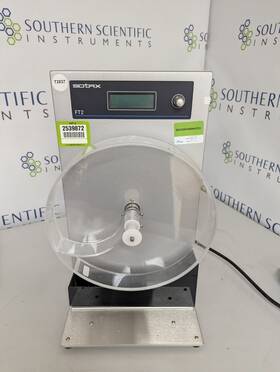
( Brand: Sotax ), ( Manufacturer Part Number: 002.522 ), ( Part Type: Tester )
Review SOTAX Ft2 Tablet Friability Tester
Introducing the SOTAX 002.522 FT2 Tablet Friability Tester, a sophisticated and reliable instrument designed to measure the crumbling or breaking tendency of pharmaceutical tablets. This device is an essential tool for quality control laboratories and R&D departments, ensuring the consistency and stability of pharmaceutical formulations.
The SOTAX 002.522 FT2 Tablet Friability Tester features a user-friendly design, allowing for easy and accurate measurement of friability. The testing chamber is constructed of high-quality stainless steel, ensuring durability and resistance to corrosion. The tester is capable of accommodating tablets with a diameter ranging from 6 to 14 mm, making it suitable for a wide range of pharmaceutical applications.
The testing process is carried out in accordance with recognized standards, such as USP , EP, and JP. The tester employs a rotor with adjustable revolutions per minute (RPM) to gently agitate the tablets, simulating handling and transportation conditions. The friability percentage is calculated based on the weight loss of the tablets before and after testing.
The SOTAX 002.522 FT2 Tablet Friability Tester offers various testing modes, including single, continuous, and step test. The single test mode is suitable for testing a small number of tablets, while the continuous and step tests are suitable for larger batches. The tester also includes a built-in data logger, allowing for the storage and retrieval of test results.
The instrument comes with a clear and intuitive touchscreen display, making it easy to navigate through the various testing options and settings. The tester also includes a built-in printer, enabling the direct printing of test results. Additionally, the tester is equipped with a USB interface, allowing for easy data transfer to a computer for further analysis.
The SOTAX 002.522 FT2 Tablet Friability Tester is designed with operator safety in mind. The testing chamber is securely closed during operation, preventing any accidental spills or exposure to tablets. The instrument is also equipped with a safety interlock system, which automatically stops the testing process if the testing chamber is opened during operation.
In conclusion, the SOTAX 002.522 FT2 Tablet Friability Tester is a versatile and precise instrument, suitable for pharmaceutical laboratories and R&D departments. Its user-friendly design, advanced features, and adherence to recognized standards make it an essential tool for ensuring the quality and stability of pharmaceutical formulations.
The SOTAX 002.522 FT2 Friability Tester is a laboratory instrument designed for measuring the friability of pharmaceutical tablets. Here are some pros and cons that might help you in deciding whether to purchase this device:
Pros:1. High Precision: The SOTAX 002.522 FT2 Friability Tester offers high precision and accuracy, ensuring consistent and reliable results.
2. Compliance with Regulatory Standards: The device complies with regulatory standards such as the USP , EP, and JP, making it suitable for pharmaceutical applications.
3. User-Friendly: The instrument is easy to use, with an intuitive interface and clear instructions.
4. Durable: The SOTAX 002.522 FT2 Friability Tester is built to last, with high-quality components and sturdy construction.
5. Versatile: The device can test various types and sizes of tablets, making it a versatile tool for pharmaceutical laboratories.
Cons:1. Expensive: The SOTAX 002.522 FT2 Friability Tester is a high-end instrument and can be quite expensive.
2. Requires Calibration: Like all laboratory instruments, the SOTAX 002.522 FT2 Friability Tester requires regular calibration to ensure accurate results.
3. Limited Capacity: The device can only test a limited number of tablets at a time, making it less suitable for large-scale testing.
In conclusion, the SOTAX 002.522 FT2 Friability Tester is a high-precision and versatile instrument that complies with regulatory standards and is suitable for pharmaceutical applications. However, it is also expensive and requires regular calibration. If your laboratory requires frequent friability testing and can afford the investment, this device is an excellent choice. On the other hand, if you have limited resources, you might consider alternative methods or less expensive instruments. Ultimately, the decision depends on your specific needs and budget.
Details:
part #: 002522 prices
- $99.95-$1200.00
specifications labequipi:
- brand: Sotax
- mpn: 002.522
- part type: Tester
seller labequipi:
- rating: 100.0%
- # reviews: 1952
- city: Granite Quarry, North Carolina
payments labequipi:
- credit card: Discover
- wallet: Paypal
- other
shipping labequipi:
- service: UPS Ground
- transit: 4-7 Days
- type: Calculated
- carrier: UPS
- cost: $111.44
- class: Standard
general labequipi:
- condition: For parts or not working
- Healthcare, Lab Dental > Medical Lab Equipment, Devices > Other Medical Lab Equipment
offer labequipi:
- availability: In Stock
- best offers: True
- options: Ship-to-home
- started: November 27, 2025
- sold: 0
- quantity: 1
returns labequipi:
- policy: No Returns
Sotax 002.522 Is Similar To:
- Sotax 0026.033 2015-1 230774 Pharmatron Ft2 Friability Testing System (59.5% similar) Shipping options are shown on the item page in shipping calculator. Power cord attached. Please reach out with any questions. See photos for more details. This listing is for what pictured only. Compatibility issues are not considered dead on arrival. Extra plastic disk. Contact the carrier for ...(October 22nd, 2025)
- Sotax 15520-01 Pharmatron Multitest 50 G2 Mt50 Tablet Hardness Tester Password Locked (42.5% similar) Item might show damage like scratches/scuffs/dents. Shipping: my shipping quote is only for items being ship inside the USA. Check pictures. Unit its password locked by previous users it will need to be reset, #X5982, condition: used, item was pulled from a working environment...(November 30th, 2025)