TELEDYNE PHOTOMETRICS 01-PRIME-95B-R-M-16-C Scmos Camera Prime
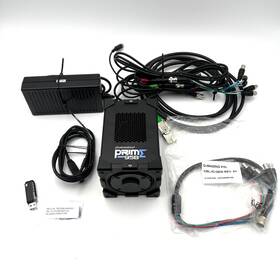
( Brand: Teledyne Photometrics ), ( Manufacturer Part Number: 01-PRIME-95B-R-M-16-C ), ( Model: PRIME-95B ), ( Part Type: Camera ), ( Country/region Of Manufacture: Canada ), ( Intended Use/discipline: Biological Laboratory, Medical Laboratory, Microbiological Laboratory, Veterinary Medicine )
Review TELEDYNE PHOTOMETRICS Prime 95b Scmos Camera
The Teledyne Photometrics Prime 95B-R-M-16-C is a high-performance, scientific-grade SC-16 interface camera designed for demanding imaging applications. This monochrome camera features a 16-bit resolution, providing superior image quality and dynamic range. The Prime 95B-R-M-16-C is based on the latest generation of Teledyne's advanced, back-thinned, progressive scan, and frame transfer CCD sensors.
This camera boasts an extremely low read noise of 2.5 e- and a high quantum efficiency of up to 60%, ensuring excellent signal-to-noise ratio and high-sensitivity performance. Its large format size of 47.68 x 38.91 mm allows for high resolution imaging, making it suitable for various applications including astronomy, microscopy, and industrial inspection.
The Prime 95B-R-M-16-C is equipped with a versatile readout mode, enabling users to select between various options including full frame, sub-array, and binning modes. It also supports a wide range of temperatures, from -10 to 50 degrees Celsius, allowing for optimal performance in various environments.
This camera comes with an ROI (Region of Interest) function, which enables the user to select and readout a specific area of the sensor, reducing the overall data rate and improving the frame rate. Additionally, it offers on-chip binning capabilities, enabling users to increase pixel size and improve signal and reduce noise.
The Prime 95B-R-M-16-C features a robust construction with a high-quality, anodized aluminum housing and a built-in temperature control system. It also comes with a USB 3.0 interface, making it easy to connect to a computer and transfer data. The camera is supported by the popular ImageQE software, which provides a user-friendly interface for controlling and acquiring images.
Overall, the Teledyne Photometrics Prime 95B-R-M-16-C is a powerful and versatile camera that delivers high-quality, scientific-grade images with exceptional sensitivity and dynamic range. Its advanced features and robust construction make it an ideal choice for applications that demand high performance and reliability.
Pros and Cons of Buying a Teledyne Photometrics Prime 95B SCMSO Camera
1. Pros:a) High Sensitivity: The Prime 95B camera from Teledyne Photometrics is known for its high quantum efficiency and low read noise, making it an excellent choice for low-light imaging applications.
b) Versatile: The camera offers various interfaces (USB3, GigE, and Camera Link), allowing users to choose the one that best suits their system requirements.
c) Scientific Grade: Designed for scientific research, the Prime 95B camera delivers high-quality images and data, suitable for various applications in fields such as astronomy, microscopy, and spectroscopy.
d) Customizable: Users can customize the camera settings, including gain, exposure time, and binning, to optimize it for their specific application.
e) Robust: The camera is built with high-quality components and undergoes rigorous testing to ensure reliability and durability.
2. Cons:a) Expensive: The Teledyne Photometrics Prime 95B camera is a high-end scientific camera, and its price tag reflects the advanced features and capabilities it offers.
b) Complex Setup: Setting up the camera and optimizing its performance requires a good understanding of imaging systems and data processing software.
c) Requires Cooling: The camera generates heat during operation, and cooling is necessary to maintain optimal performance.
d) Limited Resolution: With a resolution of 1600x1200 pixels, the camera may not be suitable for applications that require high-resolution images.
Conclusion:The Teledyne Photometrics Prime 95B camera offers several advantages, such as high sensitivity, versatility, scientific grade performance, customizability, and robustness. However, it also comes with some disadvantages, including a high price tag, complex setup, the need for cooling, and limited resolution.
Based on the information provided, the Teledyne Photometrics Prime 95B camera is an excellent choice for researchers and professionals in fields that require high-quality, low-light imaging. It offers superior performance and advanced features, making it a worthwhile investment for those with the necessary budget and expertise to set it up and utilize its capabilities effectively.
Recommendation:If you are in the market for a high-end scientific camera for low-light imaging applications, the Teledyne Photometrics Prime 95B is an excellent option to consider. However, it's essential to weigh the pros and cons carefully and ensure that you have the necessary expertise and resources to optimize the camera's performance and make the most of its capabilities. Alternatively, you might consider less expensive options with similar features if your application does not require the highest possible image quality or resolution.
Details:
It is notable for being a back-illuminated sCMOS camera, which significantly improves quantum efficiency and sensitivity. Air and Liquid-Cooled Options. Large sensor size allows for capturing wide fields of view, reducing the number images needed tiling. USB Data Cable - No PCI Interface Card Included.
Back-Illuminated Sensor. The Teledyne Photometrics Prime 95B is a high-performance scientific CMOS sCMOS camera, widely used in fluorescence microscopy, super-resolution imaging, and other low-light applications. It is one of the highest QE among sCMOS cameras, making it highly sensitive for low-light imaging. Larger pixels improve light collection efficiency and signal-to-noise ratio SNR.
Low Read Noise. Key Features: 95% Quantum Efficiency QE. Unlike front-illuminated sensors, the back-illuminated architecture removes obstruction of wiring layers, maximizing photon collection. Capable of imaging at up to 82 frames per second fps full resolution.
High Speed Large Field of View. SCMOS Advantages Over EMCCD. Higher speed, larger field of view, lower cost per pixel, and better longevity compared to EMCCD cameras, which suffer from excess noise factor ENF aging effects. Read noise is around 1.6 e-, which significantly lower than traditional CCD cameras.
Captures fine intensity differences, making it suitable for applications requiring precise quantification of light. Video Output Cables, USB Drive - With Drivers Micro-Manager.
part #: 01prime95brm16 price
- $9500.00
specifications labequipi:
- brand: Teledyne Photometrics
- mpn: 01-prime-95b-r-m-16-c
- model: Prime-95b
- part type: Camera
- country/region of manufacture: Canada
- intended use/discipline: Biological Laboratory, Medical Laboratory, Microbiological Laboratory, Veterinary Medicine
shipping labequipi:
- cost: $0.00
- service: UPS Ground
- type: Fixed
- transit: 4-8 Days
- carrier: UPS
- class: Standard
payments labequipi:
- other
- wallet: Paypal
- credit card: Mastercard
returns labequipi:
- method: Money back
- policy: Returns Accepted
- time: 30 Days
- paid by: Buyer
offer labequipi:
- best offers: True
- sold: 0
- quantity: 1
- options: Ship-to-home
- availability: In Stock
- started: February 23, 2025
general labequipi:
- condition: Used
- Healthcare, Lab Dental > Medical Lab Equipment, Devices > Other Medical Lab Equipment
seller labequipi:
- city: Crockett, California
- # reviews: 197
- rating: 99.2%
Teledyne Photometrics 01-PRIME-95B-R-M-16 Is Similar To:
- Teledyne A-gv3000 Dalsa Ver V1.0c Camera Controller (32.2% similar) If manuals, software, packaging etc. The power supply, monitor, VGA cable and mouse used to test this unit are not included in the listing. Are not mentioned, they are included. Teledyne salsa veer. V1.0C camera controller, model: A-GV30 the unit has been pulled from a retired machine. Shipping is ...(October 17th, 2025)