TARGET 104555 Probe Tcs Capture Sequencing
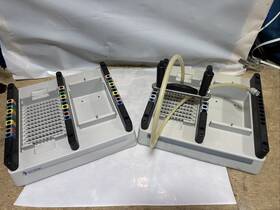
( Brand: Target ), ( Manufacturer Part Number: 104555 ), ( Part Type: Probe )
Review TARGET Gen probe Tcs Capture Sequencing
Introducing the 104555 GEN-Probe TCS Capture Sequencing System, a powerful tool designed for researchers and laboratory professionals seeking to advance their genetic research projects. This state-of-the-art system is engineered to provide high-performance, reliable, and accurate results for TCS (Targeted Capture Sequencing) experiments.
The 104555 GEN-Probe TCS Capture Sequencing System is based on a novel probe design technology that offers superior specificity and sensitivity. Its probes are designed to hybridize to target regions of interest with high affinity and selectivity, ensuring efficient capture of the desired DNA fragments. This results in a higher yield of targeted sequences, reducing the need for tedious manual curation and increasing overall data quality.
The system's workflow is designed to be user-friendly and efficient. It includes an automated probe hybridization step, which allows for rapid and consistent capture of target sequences. This is followed by a simple bead-based enrichment process, which isolates the captured DNA fragments for downstream library preparation and sequencing.
The 104555 GEN-Probe TCS Capture Sequencing System is compatible with various library preparation kits and sequencing platforms, making it a versatile tool for a wide range of applications. Whether you're working on gene discovery, mutation analysis, or genetic diagnostics, this system can help you achieve your research goals with confidence.
Additionally, the system's intuitive software interface allows for easy experiment setup and data analysis. It includes features such as real-time monitoring of hybridization progress and automated data processing, saving users valuable time and effort.
In summary, the 104555 GEN-Probe TCS Capture Sequencing System is a high-performance, user-friendly solution for targeted capture sequencing experiments. Its advanced probe design technology, automated workflow, and compatibility with various library preparation kits and sequencing platforms make it an indispensable tool for researchers and laboratory professionals seeking to advance their genetic research projects.
The Gen-Probe TCS System (model 104555) is a laboratory instrument used for the automated detection and quantification of nucleic acid targets in clinical samples. This technology, known as Temporal Temperature Controlled Probe (TTP) or Temperature Cycle Sequencing (TCS), is widely used in clinical microbiology laboratories for the detection and identification of various bacterial and viral pathogens. Here are some pros and cons of buying this system for your laboratory:
Pros:1. High Specificity and Sensitivity: TCS technology offers excellent specificity and sensitivity for the detection and identification of various microorganisms. It can detect as low as one organism per milliliter in complex samples.
2. Wide Range of Applications: The Gen-Probe TCS System can be used for the detection and identification of a wide range of bacterial and viral pathogens, including Mycobacterium tuberculosis, Neisseria meningitidis, Streptococcus pneumoniae, and many others.
3. Faster Turnaround Time: The automated nature of the TCS system reduces the time required for processing samples compared to traditional culture methods. Results can be obtained within hours instead of days.
4. Easy to Use: The Gen-Probe TCS System is designed to be user-friendly, with a simple interface and automated processes, making it relatively easy to use for laboratory personnel.
5. Cost-Effective: Over time, the TCS system can be cost-effective as it reduces the need for manual labor and the consumption of culture media and other reagents.
Cons:1. High Initial Cost: The Gen-Probe TCS System has a high initial cost, including the cost of the instrument, reagents, and required infrastructure such as power supply and water system.
2. Limited Multiplexing Capability: The Gen-Probe TCS System can only detect one target per probe, limiting its multiplexing capability. This may require running multiple tests to detect multiple targets in a single sample.
3. Requires Regular Maintenance: The Gen-Probe TCS System requires regular maintenance to ensure optimal performance and accuracy. This includes regular calibration, quality control, and reagent preparation.
4. Limited Sample Volume: The Gen-Probe TCS System has a limited sample volume capacity, requiring smaller sample volumes compared to other automated systems.
Conclusion:The Gen-Probe TCS System offers several advantages over traditional culture methods for the detection and identification of microorganisms, including high specificity and sensitivity, faster turnaround time, and ease of use. However, it also comes with some disadvantages, such as a high initial cost, limited multiplexing capability, and the need for regular maintenance. Based on these considerations, laboratories need to weigh the benefits and drawbacks of this technology and determine if it is the right choice for their specific needs and budget.
Recommendation:If your laboratory requires a high throughput, automated system for the detection and identification of a wide range of microorganisms, the Gen-Probe TCS System may be a good investment. However, if you have a limited budget or require a system with greater multiplexing capability, alternative technologies such as Polymerase Chain Reaction (PCR) or Loop-Mediated Isothermal Amplification (LAMP) may be more suitable options. It is recommended to evaluate the specific requirements of your laboratory and consult with industry experts to make an informed decision.
Details:
Whether you are a small startup or large established company, these GEN-PROBE TCS systems sure to meet your sequencing needs. With the ability to process multiple samples simultaneously, these systems are perfect for use in research and development, as well clinical settings diagnose monitor genetic diseases. This listing includes two GEN-PROBE TCS Target Capture Sequencing systems from the trusted brand. These systems are ideal for use in medical and laboratory settings, designed to capture sequence DNA RNA samples with high accuracy efficiency.
part #: 104555 prices
- $281.06-$445.00
specifications labequipi:
- brand: Target
- mpn: 104555
- part type: Probe
seller labequipi:
- city: Apex, North Carolina
- rating: 99.4%
- # reviews: 600
general labequipi:
- condition: Used
- Healthcare, Lab Dental > Medical Lab Equipment, Devices > Other Medical Lab Equipment
shipping labequipi:
- cost: $103.10
- class: Standard
- type: Calculated
- transit: 5-11 Days
- service: USPS Ground Advantage, UPS Ground
- carrier: USPS, UPS
payments labequipi:
- credit card: Diners-club
- other
- wallet: Google-pay
returns labequipi:
- policy: No Returns
offer labequipi:
- best offers: True
- started: May 11, 2025
- availability: In Stock
- sold: 0
- options: Ship-to-home
- quantity: 1