FORTEBIO 18-5092 Amine Reactive Biosensors 2ND AR2G
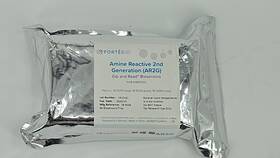
( Brand: Fortebio ), ( Manufacturer Part Number: 18-5092 ), ( Intended Use/discipline: Biological Laboratory )
Review FORTEBIO Amine Reactive 2nd Generation Biosensors
The ForteBio 18-5092 Amine Reactive 2nd generation AR2G biosensors are a high-performing and versatile tool for surface plasmon resonance (SPR) analysis in biochemistry and pharmaceutical research. These sensors are engineered for the specific detection of amine groups, making them an excellent choice for studying various types of biological interactions, including protein-ligand, protein-protein, and antibody-antigen interactions.
The AR2G sensors are based on ForteBio's proprietary 2nd generation technology, which offers several advantages over traditional sensors. The design includes a dextran layer that enhances the sensor's capture capacity and extends its lifetime, enabling the analysis of multiple cycles of interaction. Additionally, the AR2G sensors have an optimized carboxymethyl dextran (CMD) layer that provides a highly stable and uniform surface for immobilization of capture reagents, ensuring consistent and reliable results.
The amine reactive nature of the AR2G sensors allows for the use of a wide range of capture reagents, including primary amines, amine-containing peptides, and antibodies with amine modifications. This flexibility makes these sensors suitable for various applications, including the analysis of small molecules, proteins, and complex biomolecular systems.
The ForteBio 18-5092 Amine Reactive 2nd generation AR2G biosensors feature a compact and robust design, with a footprint of just 1.4 inches by 1.7 inches, making them well-suited for use in automated systems and high-throughput screening applications. The sensors are supplied pre-functionalized and are ready for use, ensuring a quick and easy setup for researchers.
The AR2G sensors offer excellent sensitivity, with a detection limit as low as 1 nanomolar for some interactions. The sensors also provide real-time kinetic data, enabling the analysis of association and dissociation rates, as well as equilibrium constants. The data can be easily analyzed using ForteBio's Data Analysis Software (DAS), which offers a user-friendly interface for data processing, analysis, and reporting.
In summary, the ForteBio 18-5092 Amine Reactive 2nd generation AR2G biosensors are a powerful and versatile tool for SPR analysis, offering excellent sensitivity, a wide range of applications, and easy-to-use functionality. These sensors are an ideal choice for researchers in the fields of biochemistry, pharmaceuticals, and molecular interactions, seeking to study various types of biological interactions with high precision and accuracy.
ForteBio's 18-5092 Amine Reactive 2nd generation AR2G biosensors are a type of biosensor used for real-time binding analysis in various research areas, particularly in the field of protein-protein interactions and affinity measurements. Here are some pros and cons of buying these biosensors:
Pros:1. High Specificity: The AR2G biosensors offer high specificity due to their amine reactive surface that allows for selective binding to specific biomolecules, reducing the background noise and increasing the signal-to-noise ratio.
2. Real-time Analysis: The biosensors enable real-time analysis of binding events, providing valuable information about the kinetics of protein-protein interactions and affinity constants.
3. Wide Applicability: The biosensors are applicable to a wide range of research areas, including biotherapeutics development, drug discovery, and diagnostic development.
4. User-friendly: The biosensors are relatively easy to use, requiring minimal sample preparation and simple data analysis.
5. Reusable: The biosensors can be reused multiple times, reducing the overall cost per experiment.
Cons:1. Expensive: The biosensors are relatively expensive, particularly for large-scale or high-throughput experiments.
2. Requires specialized equipment: The biosensors require the use of specialized equipment, such as an optical biosensor reader, which can be costly and complex to set up and operate.
3. Limited capacity: The biosensors have a limited capacity for analyzing large sample volumes or high-throughput experiments.
4. Limited dynamic range: The biosensors have a limited dynamic range, which may not be suitable for analyzing very weak or very strong binding interactions.
Conclusion:ForteBio's 18-5092 Amine Reactive 2nd generation AR2G biosensors offer several advantages for researchers in the fields of protein-protein interaction and affinity measurements. They provide high specificity, real-time analysis, and wide applicability, while being relatively user-friendly and reusable. However, they are relatively expensive, require specialized equipment, have limited capacity, and limited dynamic range.
Recommendation:If you are conducting research in the areas of protein-protein interactions and affinity measurements, and require high specificity and real-time analysis, then ForteBio's 18-5092 Amine Reactive 2nd generation AR2G biosensors may be a suitable option for you. However, you should carefully consider the costs, required equipment, and limitations of the biosensors before making a purchase. Additionally, you may want to explore alternative biosensor technologies or consider collaborating with other research institutions or commercial partners to share the costs and benefits of the biosensors.
Details:
Shipping carriers: FedEx, UPS, and USPS. Box Delivery. Product Specifications. It was found to be fully operational with no issues only cosmetic damages.
The unit may have scuffs, light scratches, or dings. Cosmetic damages will not affect the performance of unit. Tests conducted on the system are as follows: The item was powered and tested. 30 Day Warranty.
part #: 185092 prices
- $95.00-$350.00
specifications labequipi:
- brand: Fortebio
- mpn: 18-5092
- intended use/discipline: Biological Laboratory
returns labequipi:
- time: 30 Days
- paid by: Buyer
- policy: Returns Accepted
- method: Money back
payments labequipi:
- wallet: Apple-pay
- other
- credit card: Mastercard
seller labequipi:
- rating: 94.9%
- city: Sacramento, California
- # reviews: 1089
general labequipi:
- condition: New
- Healthcare, Lab Dental > Medical Lab Equipment, Devices > Other Medical Lab Equipment
offer labequipi:
- quantity: 1
- sold: 0
- options: Ship-to-home
- started: August 31, 2025
- availability: In Stock
shipping labequipi:
- class: Standard
- carrier: FedEx
- service: FedEx Ground / FedEx Home Delivery
- type: Calculated
- cost: $0.00
- transit: 6-12 Days