BIO-RAD 30-06086 Raindance Raindrop Sense Chip 30-04296
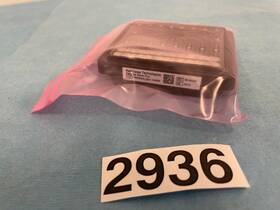
( Brand: Bio-rad ), ( Manufacturer Part Number: 30-06086 ), ( Mpn2: 30-04296 ), ( Country Of Origin: Austria ), ( Intended Use/discipline: Biological Laboratory )
Review BIO RAD Raindance Technologies Raindrop Sense Chip
The Bio-Rad RainDrop Sense Chip 30-04296, when used in conjunction with the RainDrop Microfluidics System 30-06086, offers a powerful and versatile solution for high-throughput screening and quantitative analysis of biological samples.
The RainDrop Sense Chip is a lab-on-a-chip device, designed to facilitate the automation of various microscale liquid handling tasks. It features an array of thousands of microwells, each with dimensions of approximately 10 microns in height and 100 microns in diameter. These microwells are arranged in a dense, regular pattern, enabling the simultaneous processing of numerous samples.
The chip is fabricated using photolithography and microfabrication techniques, ensuring precise and consistent microwell geometries. The hydrophilic surfaces of the microwells are optimized for efficient liquid handling, allowing for the rapid and reproducible transfer of small volumes of liquid between microwells.
The RainDrop Sense Chip 30-04296 is compatible with a wide range of sample types, including proteins, peptides, and small molecules. It can be used for various applications, such as enzyme assays, cell-based assays, and binding assays. The chip's small sample volumes and high-throughput capabilities make it particularly well-suited for large-scale screening studies.
The RainDrop Microfluidics System 30-06086, when used in conjunction with the RainDrop Sense Chip 30-04296, automates the loading, dispensing, and transfer of samples between microwells. It features a user-friendly interface and can be easily integrated with various detection systems, such as fluorescence readers, mass spectrometers, and electrochemical sensors.
In summary, the Bio-Rad RainDrop Sense Chip 30-04296, when used with the RainDrop Microfluidics System 30-06086, provides a powerful and versatile tool for high-throughput screening and quantitative analysis of biological samples. Its small sample volumes, efficient liquid handling, and wide compatibility with various sample types make it an essential addition to any laboratory focused on microscale research and development.
Pros and Cons of buying a Bio-Rad RainDance RainDrop Sense Chip 30-04296 with the 30-06086 Reader
Introduction:The Bio-Rad RainDance RainDrop Sense Chip 30-04296 and the 30-06086 reader are widely used in microarray analysis for gene expression profiling. This analysis helps in identifying the genetic variations and understanding biological processes. In this context, this discussion provides an insight into the pros and cons of purchasing a Bio-Rad RainDance RainDrop Sense Chip 30-04296 along with the 30-06086 reader.
Pros:1. High-density arrays: The RainDrop Sense Chip 30-04296 offers a high-density spotting, allowing for more data points to be analyzed in a single experiment. This results in more comprehensive and detailed gene expression analysis.
2. Low sample volume: The RainDrop Sense Chip technology uses a low sample volume, which is beneficial for precious samples or experiments with limited sample availability.
3. Flexibility: The RainDrop Sense Chip system is compatible with various hybridization platforms and detection methods, providing researchers with flexibility in their experimental designs.
4. Cost-effective: The cost per spot on the RainDrop Sense Chip is lower compared to traditional microarray platforms, making it a cost-effective option for large-scale gene expression analysis.
5. Automated workflow: The RainDrop Sense Chip system offers an automated workflow, which increases throughput and reduces the risk of human error during the experiment.
Cons:1. Learning curve: Operating the RainDrop Sense Chip system and software may require a learning curve for new users, which could lead to additional time and resources needed for training.
2. Limited software compatibility: While the RainDrop Sense Chip system is compatible with various hybridization platforms, the software compatibility might be limited for some users, requiring additional investment in software solutions.
3. Cost of equipment: The initial investment for the RainDrop Sense Chip reader and other necessary equipment might be higher compared to some other microarray platforms.
4. Complexity: The RainDrop Sense Chip system is more complex than traditional microarray platforms, which could result in additional time spent on troubleshooting and maintenance.
Conclusion:The Bio-Rad RainDance RainDrop Sense Chip 30-04296 and the 30-06086 reader offer several advantages, such as high-density arrays, low sample volume, flexibility, cost-effectiveness, and automated workflow. However, they also come with some disadvantages, including a learning curve, limited software compatibility, higher initial equipment costs, and complexity. Ultimately, the decision to purchase the RainDrop Sense Chip system depends on the specific needs, resources, and experimental goals of the researcher.
Recommendation:If the researcher requires high-density gene expression analysis, has limited sample availability, and values the flexibility and cost-effectiveness offered by the RainDrop Sense Chip system, then it may be a worthwhile investment despite the learning curve, limited software compatibility, and higher initial equipment costs. However, if the researcher is working with a limited budget or lacks the necessary resources for training and maintenance, alternative microarray platforms with simpler workflows and lower costs might be more suitable.
Details:
Please see pictures for details on condition. ONLY receive what is pictured. At the start of this listing there are NINE 9 chips available. RainDance Technologies Bio-Rad RainDrop Sense Chip 30-06086, 30-04296, New, Open-Box.
Each purchase is for ONE 1 chip. SHIPPING: - Flat Rate Shipping on most items is for the lower 48 USA States only.
part #: 3006086 prices
- $39.99-$54.46
specifications labequipi:
- brand: Bio-rad
- mpn: 30-06086
- mpn2: 30-04296
- country of origin: Austria
- intended use/discipline: Biological Laboratory
payments labequipi:
- other
- wallet: Google-pay
- credit card: Discover
general labequipi:
- Healthcare, Lab Dental > Medical Lab Equipment, Devices > Other Medical Lab Equipment
- condition: New Open box
seller labequipi:
- city: Durham, North Carolina
- # reviews: 745
- rating: 99.2%
offer labequipi:
- availability: In Stock
- quantity: 9
- sold: 0
- best offers: True
- options: Ship-to-home
- started: January 26, 2026
returns labequipi:
- policy: No Returns
shipping labequipi:
- transit: 4-8 Days
- class: Expedited
- cost: $10.00
- carrier: USPS
- service: USPS Priority Mail
- type: Fixed
Bio-rad 30-06086 Is Similar To:
- 1327 Bio-rad Model Econo-recorder Used (26.3% similar) ...(February 20th, 2018)
- 1575 Bio-rad Immunowash Microplate Washer (27.4% similar) Money back guaranteed. Clean, in perfect condition, fully tested, all test passed...(April 30th, 2017)
- 165-1960 Bio-rad 443 Slab Drier (29.9% similar) It powers on and the timer comes with knob. It also seems to warm up very quickly. It only comes with what is shown in the pictures. Bio-rad 443 slab drier catalog no...(January 21st, 2018)
- 165-1965 Bio-rad 483 Slab Dryer (26.2% similar) Domestic shipping: our preferred shipping method is ups ground service unless item too large heavy. Timer controls temperature up to 5 hours this instrument was thoroughly cleaned, quality-tested and comes with 90-DAY warranty. Please if you prefer a specific shipping carrier for updated rate quote...(February 28th, 2017)
- 165-2086 Bio-rad Gene Pulser Cuvette (32.1% similar) 1CM electrode gap broad d5 hello, you are viewing a listing of product wood man mechanical surplus. They are expected to show some wear as pre-owned. Bio-rad gene pulse Corvette. Exactly what is pictured included. If it is not pictured assume included...(December 1st, 2017)
- 165-5031 Bio-rad Bio Rad Gs (31.1% similar) No other cords, cables, manuals, accessories, included. Unit is in good working condition. Bio rad gs gene linker UV chamber. Quick reference chart attached on front as shown. Some stains inside chamber as shown. Comes with power cord...(January 30th, 2018)
- 1652087 Bio-rad Bio Rad Capacitance (32.4% similar) Capacitance extender readout cable only. This item has been fully tested by our tech department and is in good working condition...(April 16th, 2017)
- 1652088 Bio Rad Gene Pulser Cuvette Electrode Gap (27.2% similar) Unopened bag of 50. 4CM electrode gap see photos...(August 24th, 2018)
- 1653369 Bio Rad Slighly Used (26.9% similar) ...(May 6th, 2017)
- 1703751 Bio-rad Lot Of 2 (28% similar) These two florescent lamps come as a lot and are brand new in the original packaging. See pictures for details. To make sure you are getting an accurate quote via the shipping calculator, your zip code is default when calculating cost for this item. Box was only opened for pictures this ad. Review ...(September 4th, 2017)
- 250-2.5 Bio Rad Electrophoresis Power Supply Volt Dc Output Amp (24.5% similar) 50 power supply volt dc output...(September 1st, 2018)