ANDOVER CORPORATION 365FS10-12.5 Optical Interference Filter 365NM Cwl 10NM 12.5MM
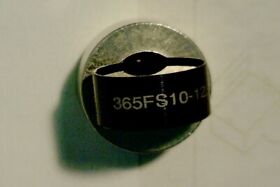
( Brand: Andover Corporation ), ( Manufacturer Part Number: 365FS10-12.5 ), ( Part Type: Filter ), ( Custom Bundle: Yes ), ( Country Region Of Manufacture: United States ), ( Modified Item: No ), ( Intended Use Discipline: Physics Laboratory )
Review ANDOVER CORPORATION Tical Interference Filter 365nm Cwl 10nm Bw 12.5mm Dia
The optical interference filter you're interested in is a specialized tool designed to selectively block or pass specific wavelengths of light. This particular filter is tailored for 365 nanometers (nm) of center wavelength (CWL) and features a bandwidth (BW) of 10 nanometers. The bandwidth refers to the range of wavelengths that the filter allows to pass through, and a 10nm bandwidth is quite narrow, ensuring a high degree of selectivity.
The filter has a thickness of 12.5mm, which is substantial compared to other filters, indicating a higher density of interference layers. This density allows for a more effective blocking of unwanted light, enhancing the filter's performance. The thicker design also makes it more durable, capable of withstanding the rigors of use in various applications.
The optical interference filter works by utilizing multiple layers of dielectric materials with precisely controlled thicknesses. When light encounters these layers, it interferes with itself, creating constructive and destructive interference patterns that result in the filter's selective transmission or reflection of specific wavelengths.
In practical applications, this filter can be used in various fields, such as UV-curing applications, fluorescence microscopy, and holography, where precise control of 365nm light is required. Its high selectivity and durability make it an excellent choice for professionals seeking superior performance from their optical filters.
Pros of buying an optical interference filter for 365nm CWL 10nm BW 12.5mm:1. Improved Image Quality: The filter can help eliminate unwanted light sources and reduce unwanted background noise, resulting in improved image quality and better signal-to-noise ratio.
2. Narrow Bandwidth: The 10nm bandwidth ensures that only the desired wavelength of light is transmitted, reducing spectral contamination and improving the accuracy of measurements.
3. Wide Field of View: The 12.5mm diameter allows for a wide field of view, making it suitable for various applications such as spectroscopy, fluorescence microscopy, and UV-vis spectrophotometry.
4. Durability: High-quality filters are made of materials that are resistant to scratching and other forms of damage, ensuring long-term use.
Cons of buying an optical interference filter for 365nm CWL 10nm BW 12.5mm:1. Cost: High-quality filters can be expensive, which may be a drawback for researchers and students with limited budgets.
2. Limited Wavelength Range: The filter is specifically designed for 365nm CWL 10nm BW, which may limit its use in applications where other wavelengths are required.
3. Potential for Light Loss: The filter may cause some loss of light, which can impact the sensitivity of the measurement.
Conclusion:An optical interference filter for 365nm CWL 10nm BW 12.5mm can provide significant improvements in image quality and accuracy in certain applications. However, the cost and limited wavelength range are potential drawbacks that should be considered before making a purchase. Researchers and students should weigh these pros and cons carefully to determine if the filter is a worthwhile investment for their specific application.
Recommendation:If the desired application requires a narrow bandwidth and high spectral purity, and the cost is not a major concern, then an optical interference filter for 365nm CWL 10nm BW 12.5mm is a recommended option. However, if the budget is limited or if the desired wavelength range is broader, alternative filter options may be more suitable. It is always recommended to consult with a knowledgeable technical support specialist to ensure that the filter is the best option for the specific application.
Details:
Pass band: 10nm band width FWHM. 1 surplus filter available. The Andover Corporation 365FS10-12.5 is in new open box condition.
part #: 365fs10125 prices
- $85.49-$303.69
specifications labequipi:
- brand: Andover Corporation
- mpn: 365fs10-12.5
- part type: Filter
- custom bundle: Yes
- country region of manufacture: United States
- modified item: No
- intended use discipline: Physics Laboratory
Returns labequipi.com:
- policy: no returns
Rating:
- rating: 0.0%
Payments labequipi.com:
- Credit Card
- Wallet
General labequipi.com:
- Business Industrial > Healthcare, Lab Dental > Medical Lab Equipment, Devices > Other Medical Lab Equipment
- condition: New Open box
- in stock: Yes
Shipping labequipi.com:
- cost: $4.75
- type: Standard Shipping
- carrier: USPS
- type: CALCULATED
Offer labequipi.com:
- sold: 0
- best offers: yes
- Started: July 4, 2022, 8:01 pm
- quantity: 1
- options: Ship-to-home
- best offers: no
Andover Corporation 365FS10-12.5 Is Similar To:
- Andover 200fs10-50 1x Corporation 200nm Bandpass Filter Fwhm 10nm 50mm Dia Pn (42% similar) Max survival temperature range. One 1x Andover Corporation 200NM band pass filter, fem 10NM, 50MM diameter in anodized aluminum housing. Effective refractive index: n/a. Mounted in protective black anodized metal rings. Machine vision. Permanent part number engraving for easy identification. Biotech...(June 3rd, 2025)
- Andover 220fs10-50 1x Corporation 220nm Bandpass Filter Fwhm 10nm 50mm Dia Pn (42% similar) Extensive wave length coverage from UV 193NM to near-infrared. Used, in great condition. Fluorescence applications. Mounted in protective black anodized metal rings. Max survival temperature range. Medical diagnostics and biomedical research. PN220FS10-50. Permanent part number engraving for easy ...(June 3rd, 2025)
- Andover 289fs10-50 1x Corporation 289nm Bandpass Filter Fwhm 10nm 50mm Dia Pn (42% similar) Medical diagnostics and biomedical research. Flatness: commercial. Permanent part number engraving for easy identification. Spectral radiometry. Filter has been inspected closely and there are no blemishes, burns or scratches to either surface. Parallelism: commercial. From x-ray to fir. UV ...(June 3rd, 2025)
- Andover 313fs10-50 1x Corporation 313nm Bandpass Filter Fwhm 10nm 50mm Dia Pn (42% similar) PN313FS10-50. Medical diagnostics and biomedical research. Extensive wave length coverage from UV 193NM to near-infrared. Environmental testing. From x-ray to fir. UV sterilization. Scratch-dig: commercial. Flatness: commercial. One 1x Andover Corporation 313NM band pass filter, fem 10NM, 50MM ...(June 3rd, 2025)