METROHM 6.0224.100 Biotrode Electrode Titration
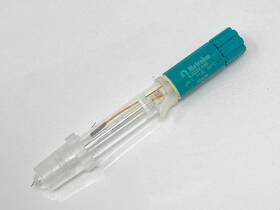
( Brand: Metrohm ), ( Manufacturer Part Number: 6.0224.100 ), ( Part Type: Electrode )
Review METROHM Biotrode Combined Ph Electrode Titration
The Metrohm 6.0224.100 Biotrode Electrode is a high-performance, precision instrument designed for titration applications in laboratories. This electrode, manufactured by Metrohm AG, a leading provider of electrochemical analysis instruments, is engineered to deliver accurate and reliable results.
The Biotrode Electrode features a membrane made of biologically active material, which provides selective response to redox reactions involving biologically important compounds. The membrane is integrated into a robust, stainless steel body that ensures durability and resistance to corrosion. The electrode is designed for use in standard laboratory conditions, with a temperature range of 0-50 C and a pH range of 2-12.
The electrode's geometry is specifically designed for efficient mass transport, ensuring that redox reactions occur rapidly and accurately. The electrode is easy to use, with a simple two-electrode system that includes the working electrode (the Biotrode) and a reference electrode. The electrodes are connected to a potentiostat, which applies a potential to the working electrode and measures the resulting current.
The Metrohm 6.0224.100 Biotrode Electrode is suitable for a wide range of applications in fields such as pharmaceuticals, food and beverage, and environmental science. It is commonly used for the determination of redox active compounds, such as ascorbic acid, glutathione, and other biologically important species. The electrode's high sensitivity and selectivity make it an essential tool for researchers and quality control analysts who require accurate and reliable results.
The electrode is easy to maintain, with a replaceable membrane that can be changed when it becomes worn or damaged. The electrode is also calibrated prior to shipping, ensuring that it is ready to use right out of the box. The electrode comes with a certificate of calibration, which provides traceability to international standards.
In summary, the Metrohm 6.0224.100 Biotrode Electrode is a high-performance, precision instrument designed for titration applications in laboratories. Its selective response to redox reactions involving biologically important compounds, robust design, and ease of use make it an essential tool for researchers and quality control analysts in fields such as pharmaceuticals, food and beverage, and environmental science.
The Metrohm 6.0224.100 biotrode electrode is a specialized instrument used for titration analysis in biological systems. This electrode is particularly useful for determining the end point of redox titrations in complex matrices such as biological samples. Here are some pros and cons of buying this electrode for your analytical needs:
Pros:1. High selectivity and sensitivity: The biotrode electrode offers high selectivity and sensitivity due to its specific design, which allows for the measurement of redox reactions in complex biological samples.
2. Improved accuracy: Compared to traditional methods, such as indicator titration, the use of a biotrode electrode can lead to increased accuracy and precision in titration analysis.
3. Faster analysis: The biotrode electrode enables real-time monitoring of redox reactions, resulting in faster analysis times compared to traditional titration methods.
4. Wide dynamic range: The biotrode electrode can detect small changes in redox potentials, making it suitable for analyzing samples with a wide dynamic range.
5. Minimal sample preparation: The biotrode electrode requires minimal sample preparation, which can save time and resources in the lab.
Cons:1. High cost: The Metrohm 6.0224.100 biotrode electrode is a costly investment, and its high price may be a barrier for some laboratories.
2. Complex operation: The use of a biotrode electrode requires specialized knowledge and expertise, which can make its operation more complex than traditional titration methods.
3. Limited applicability: The biotrode electrode is primarily used for redox titrations in biological samples, and its applicability may be limited for other types of analyses.
In conclusion, the Metrohm 6.0224.100 biotrode electrode offers several advantages over traditional titration methods, including high selectivity and sensitivity, improved accuracy, faster analysis times, and minimal sample preparation. However, its high cost, complex operation, and limited applicability may be drawbacks for some laboratories.
If your analytical needs involve redox titrations in complex biological samples, and you have the necessary expertise and resources, then the Metrohm 6.0224.100 biotrode electrode may be a valuable investment. On the other hand, if your laboratory has limited resources or if your analytical needs do not involve redox titrations in complex biological samples, then other, more cost-effective titration methods may be more suitable for your needs. Ultimately, the decision to invest in the Metrohm 6.0224.100 biotrode electrode should be based on a careful consideration of your analytical needs, expertise, and resources.
Details:
Metrohm 6.0224.100 Biotrode, Combined pH electrode for Titration, Condition is Used.
part #: 60224100 price
- $199.95
specifications labequipi:
- brand: Metrohm
- mpn: 6.0224.100
- part type: Electrode
seller labequipi:
- rating: 100.0%
- # reviews: 100
- city: Killeen, Texas
payments labequipi:
- other
- wallet: Apple-pay
- credit card: Diners-club
returns labequipi:
- paid by: Buyer
- policy: Returns Accepted
- time: 30 Days
- method: Money back
offer labequipi:
- started: May 19, 2025
- quantity: 1
- best offers: True
- availability: In Stock
- sold: 0
- options: Ship-to-home
shipping labequipi:
- cost: $0.00
- type: Calculated
- service: USPS Ground Advantage
- class: Standard
- transit: 3-9 Days
- carrier: USPS
general labequipi:
- Healthcare, Lab Dental > Medical Lab Equipment, Devices > Other Medical Lab Equipment
- condition: Used
Metrohm 6.0224.100 Is Similar To:
- 6.0262.100 Metrohm Ll Combined Ph Electrode Aqueous Titration Ecotrode (63.2% similar) Some specifications include: resistance ohm: 5MIN. Roar does not cover neglect, modifications, damage or misuse by end-user. Canada, Europe, Australia, new Zealand, Taiwan, japan, Korea and china very good condition. Us naval research labs, JP and agencies. This is our last unit. 13SHAFT material: ...(November 1st, 2018)
- 6.0341.100 00245799 Metrohm Double Electrode (39.3% similar) Brand new boxed 2 available...(September 2nd, 2018)
- 6.0733.100 Metrohm Ll Reference Electrode In Original Box (38.3% similar) The calculator is not correct. Through the system. Shipping details: purchaser pays all shipping, and related expenses, unless it says free. Please review the pictures carefully. For items not made in the u shipping overseas can be quite expensive. Metrohm condition: this item is being sold as-is, ...(June 29th, 2018)
- Metrohm 6.2055.100 Dual Bottle Holder For 2x 1l Aspiration Bottles 1 (54.5% similar) Location: F-1. Condition is used. Metrohm 6.2055.100 metal rack holder for 2x 1l aspiration bottles...(January 20th, 2024)
- Metrohm 2.1016.0010 Peristaltic 2-channel Pump Module For Omnis Sample Robot (43.2% similar) Your help is always appreciated. This happens when the postal service does not scan shipping label into their system, package arrives at first distribution point. Regardless of the origin equipment, documentation provided or identification appearing upon equipment described and offered here is in no...(September 26th, 2024)
- Metrohm 803-ti 803 Ti Stand For Parts Repair (42.6% similar) Shipping method: USPS or fed ex. There are some minor scratches, scuffs, and/or blemish es on the item. Only items shown in pictures are included. Cosmetic condition: this item is in fair to good condition cosmetically. Condition of internal components is unknown. Please see pictures for more detail...(November 6th, 2024)
- Metrohm Zro2 Piston For 709 818 Item No 62824070 (37.8% similar) Part #: Metrohm ZRO2 for sale...(January 12th, 2025)
- Metrohm 6.2104.020 Electrode Cable Assembly Brand New (50% similar) Metrohm 6.2104.020 electrode cable assembly brand new...(March 18th, 2025)
- Metrohm 6.0920.130 Electrode Finder (59.2% similar) Current rates are $175 for packing and pelleting each standard pallet standard size is 48 X40 X60 $300 non-standard. $350 for packing and pelleting each custom reinforced pallet. The and photos represent best efforts to convey information our opinions about a product. Shipping cost is calculated by ...(April 7th, 2025)
- Metrohm 6.0345.100 Platinum Screen Generator Electrode Bar Code No 00304962 (50.7% similar) Buyer to pay actual shipping charges plus $25.00PACKAGING or $200.00 crating...(November 25th, 2025)
- Metrohm 28470010 Accessories For Set (42.4% similar) Please view all pictures carefully for best. Metrohm 28470010 accessories for set. New, never used...(November 30th, 2025)