QSONICA 659-A Horn Sonicator 660-A Q500/Q700
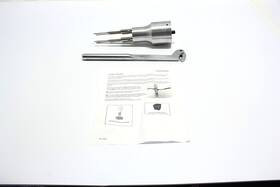
( Brand: Qsonica ), ( Manufacturer Part Number: 659-A ), ( Part Type: Horn Tip )
Review QSONICA Horn Tips Q500/q700 Sonicator
Introducing the Qsonica 659-A and 660-A horns, designed specifically for use with the Q500 and Q700 sonicators from Qsonica. These horns offer superior performance and versatility for a wide range of applications in laboratory and industrial settings.
The Qsonica 659-A horn is a focused, high intensity ultrasonic transducer horn, ideal for applications requiring high energy input. It features a small footprint and a compact design, making it easy to integrate into even the most space-constrained environments. The horn's focusable transducer allows for precise positioning of the ultrasonic energy, ensuring optimal coverage and maximum efficiency.
The Qsonica 660-A horn, on the other hand, is a diffused horn, offering a wider coverage area and lower energy input compared to the 659-A. This makes it an excellent choice for larger sample volumes or for applications where a more gentle ultrasonic process is required. The 660-A horn's diffused design provides uniform energy distribution across the sample surface, ensuring consistent and reliable results.
Both horns are constructed from high-quality materials, ensuring durability and long-lasting performance. They are designed to be easily interchangeable with the Q500 and Q700 sonicators, allowing users to switch between focused and diffused horns depending on their specific application requirements.
The Qsonica 659-A and 660-A horns are compatible with a wide range of sonication probes and accessories, allowing for maximum flexibility and versatility. They can be used in various industries, including pharmaceuticals, food processing, chemical processing, and more, making them indispensable tools for researchers, scientists, and industrial professionals.
In summary, the Qsonica 659-A and 660-A horns offer the perfect solution for users seeking high-performance, versatile, and customizable ultrasonic processing capabilities. With their focusable and diffused designs, these horns provide optimal energy distribution and coverage for a wide range of applications, ensuring consistent and reliable results every time.
The Qsonica 659-A and 660-A probes are accessories designed for use with the Q500 and Q700 sonicators. These probes are known for their superior performance in terms of ultrasonic power and versatility. Here are some pros and cons that can help you make an informed decision about whether or not to purchase these probes for your Qsonica sonicator.
Pros:1. Superior ultrasonic power: The Qsonica 659-A and 660-A probes provide higher ultrasonic power compared to other probes in the market. This translates to faster and more efficient sonication, which can save time and reduce the need for multiple sonication cycles.
2. Versatility: These probes can be used for a wide range of applications, including cell disruption, emulsification, homogenization, and extraction. They are suitable for use in various industries, including pharmaceuticals, biotechnology, food, and cosmetics.
3. Durability: The Qsonica probes are made of high-quality materials and are designed to withstand rigorous use. They are resistant to corrosion and can be cleaned easily, ensuring long-lasting performance.
4. Consistent results: The Qsonica probes provide consistent and reliable results, which is crucial for research and quality control applications.
Cons:1. Cost: The Qsonica 659-A and 660-A probes are more expensive than other probes in the market. This may be a consideration for laboratories or research institutions with limited budgets.
2. Size: These probes are larger than some other probes, which may make them less suitable for certain applications where space is limited.
3. Compatibility: These probes are specifically designed for use with the Q500 and Q700 sonicators. If you have a different model of sonicator, these probes may not be compatible.
In conclusion, the Qsonica 659-A and 660-A probes offer several advantages, including superior ultrasonic power, versatility, durability, and consistent results. However, they also come with some disadvantages, such as a higher cost and larger size. Ultimately, whether or not to purchase these probes depends on your specific application requirements, budget, and availability of alternative probes that may meet your needs. If your research or industrial process requires the highest level of ultrasonic power and versatility, then the Qsonica probes may be a worthwhile investment. However, if you have limited budget or space, or if you have a different model of sonicator, you may want to consider alternative probes that may be more suitable for your needs.
Details:
Walpole, MA 02081. All crates made with 1/2 plywood and have foam runners as well very strong. All crates confirm to ISPM-15 and will comply with import guidelines in most countries.
Info: CXA Labs.
part #: 659 prices
- $295.00-$499.99
specifications labequipi:
- brand: Qsonica
- mpn: 659-a
- part type: Horn Tip
general labequipi:
- Healthcare, Lab Dental > Medical Lab Equipment, Devices > Other Medical Lab Equipment
- condition: Used
shipping labequipi:
- transit: 4-7 Days
- class: Standard
- cost: $0.00
- type: Fixed
- service: Standard
offer labequipi:
- options: Ship-to-home
- availability: In Stock
- started: May 29, 2025
- quantity: 1
- best offers: True
- sold: 0
returns labequipi:
- time: 30 Days
- policy: Returns Accepted
- paid by: Buyer
- method: Money back
payments labequipi:
- wallet: Paypal
- other
- credit card: Mastercard
seller labequipi:
- rating: 100.0%
- city: Ashland, Massachusetts
- # reviews: 1047
Qsonica 659 Is Similar To:
- Q55-220 Qsonica Sonicator Ultrasonic Processor Vac (30.9% similar) Q55 sonicator ultrasonic processor 220 vac...(March 26th, 2018)