OPENTRONS 999-00111 Automated Pipetting Robot Dispensing OT-2 Unit Head
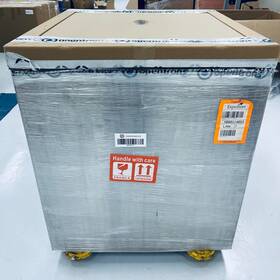
( Brand: Opentrons ), ( Manufacturer Part Number: 999-00111 ), ( Model: OT-2 ), ( Part Type: Robot Unit Head ), ( Country/region Of Manufacture: United States ), ( Intended Use/discipline: Biological Laboratory, Medical Laboratory, Microbiological Laboratory )
Review OPENTRONS Automated Pipetting Robot Liquid Dispensing Unit Head
The Opentrons 999-00111 Ot-2 Automated Pipetting Robot Dispensing Unit Head is a versatile and precise lab automation tool designed for high-throughput and complex liquid handling tasks. This dispensing unit head is an essential component of the Ot-2 pipetting robot, engineered to deliver accurate and consistent liquid volumes with minimal human intervention.
The unit head is compact yet robust, featuring an elegant and streamlined design. It is engineered with a modular construction that allows for easy integration with various labware types, including microtiter plates, deep-well plates, and PCR plates. The dispensing tips, compatible with the Opentrons AFC (Automated Flexible Connector) system, can be easily exchanged, ensuring maximum tip life and reducing downtime.
The Opentrons 999-00111 Ot-2 Automated Pipetting Robot Dispensing Unit Head is equipped with advanced features to optimize lab workflows. It offers a wide pipetting range of 1-1000 L, allowing for efficient handling of various liquid volumes. The dispensing accuracy is maintained through a calibrated z-axis, ensuring consistent dispensing height and contact force. The integrated air displacement system prevents liquid carryover and splashing, minimizing contamination risks.
The user experience of the Opentrons 999-00111 Ot-2 Automated Pipetting Robot Dispensing Unit Head is enhanced through the intuitive Opentrons Labware Development Kit (LDK) software. This software enables users to define their labware and protocols, ensuring seamless integration with the robot. Real-time data visualization and automation capabilities allow for full control and monitoring of the pipetting process.
The Opentrons 999-00111 Ot-2 Automated Pipetting Robot Dispensing Unit Head is designed with a robust construction and built-in temperature control to ensure reliable operation in various lab environments. Its open-source nature allows for easy customization and integration with external systems, making it a powerful tool for both research and production applications.
In summary, the Opentrons 999-00111 Ot-2 Automated Pipetting Robot Dispensing Unit Head is a versatile, precise, and user-friendly lab automation tool, delivering accurate liquid handling and optimizing lab workflows. Its advanced features, open-source nature, and compatibility with various labware types make it an indispensable tool for researchers and lab technicians alike.
The Opentrons OT-2 Automated Pipetting Robot Dispensing Unit Head (model number 999-00111) is a lab automation tool designed to automate liquid handling tasks in research and development settings. Here are some pros and cons of buying this product:
Pros:1. High Precision: The OT-2 Dispensing Unit Head offers high precision and accuracy, with a repeatability of /- 1 microliter. This is essential in lab environments where precise measurements are crucial.
2. Flexible: The OT-2 Dispensing Unit Head is compatible with a wide range of labware, including deep-well plates, microtiter plates, and tubes. This flexibility makes it a versatile tool for various lab applications.
3. Easy to Use: The OT-2 Dispensing Unit Head is user-friendly and easy to set up, with a simple and intuitive interface. This makes it an ideal solution for researchers and lab technicians who need to automate their pipetting tasks quickly.
4. Integration Capabilities: The OT-2 Dispensing Unit Head can be easily integrated with other lab automation tools and software, such as liquid handling protocols and data management systems. This enables users to automate their entire workflow and streamline their lab processes.
5. Cost-Effective: Compared to other automated pipetting systems, the OT-2 Dispensing Unit Head is relatively affordable, making it a cost-effective solution for labs with limited budgets.
Cons:1. Limited Payload Capacity: The OT-2 Dispensing Unit Head has a limited payload capacity of 10 kg, which may not be suitable for heavy-duty applications.
2. Requires Power Source: The OT-2 Dispensing Unit Head requires a power source to operate, which may add to the lab's infrastructure costs.
3. Limited Number of Channels: The OT-2 Dispensing Unit Head has a limited number of channels, which may not be sufficient for complex lab workflows.
4. Requires Regular Maintenance: The OT-2 Dispensing Unit Head requires regular maintenance to ensure optimal performance, which can be time-consuming and costly.
In conclusion, the Opentrons OT-2 Automated Pipetting Robot Dispensing Unit Head is a cost-effective, flexible, and high-precision tool for automating liquid handling tasks in research and development labs. However, it may not be suitable for heavy-duty applications or complex workflows that require a large number of channels. Ultimately, the decision to buy the OT-2 Dispensing Unit Head depends on the specific requirements and budget of the lab. If the lab's needs align with the capabilities of the OT-2 Dispensing Unit Head, it can be a valuable investment for improving lab productivity and accuracy.
Details:
Suffocating viscous liquids. Volatile viscous liquids are a blend of glycerol/PEG and volatile solvent such as ethanol or prototypical. Mineral oil, engine oil etc. Specifications.
Each of the components that user may interact with are described in detail topics below. Light on: This light should always be on and solid if the robot is turned. The software that runs the robot through each procedure, known as protocol, can be created in four following ways. Viscous liquids have different theological properties such as varied density.
Extra: This light should remain off for now reserved future use. Hand sanitizer etc. Lab compare Product #: OT-2 Pipetting Robot from Opentrons. Animal Product #: NEW Opentrons OT-2 Pipetting Robot 999-00111 with Single-Channel Pipette Head 999-00004 1000uL.
Note: Individual components of the robot may still fail and this light will continue to blink normally. Use your existing lab ware and reagents, Reagent consumables agnostic. As these liquids stick to the tip, slow tip withdrawal rate after aspiration, and dispensing from help in avoiding bubbles, droplet formation, clean aspiration. The Protocol Designer also does not integrate with the Python program.
These inherent liquid characteristics require changes of default protocol parameters to meet optimum handling for a given workflow. Slower aspiration and dispense, slower tip withdrawal from the liquid, blow out flow rate are key parameters impacting viscous liquid handling experience clean pipetting of liquids. The API is a simple Python framework designed to code automated biology laboratory protocols in way that reads like lab notebook. Component.
Condition: New. The viscosity of these liquids varies depending on the dilution. Not included, for Reference. This enclosure is located on the upper left side of back panel robot.
Audio, Integrated audio system Included for future or custom functionality. These protocols can perform liquid handling management and customized pipetting techniques integrate lab ware automated modules. Lower in soapy liquids but higher mercury, stickiness etc. You can also use up to two pipettes at the same time.
Wolf labs Product #: OT-2 999-00111-Package. The Opentrons OT-2 is a high-precision, open-source liquid handler designed to be easy for scientists use and flexible enough automate many application workflows. Sterility Full poly carbonate enclosure designed to limit exposure. Low for oils but high glycerol, varied surface tension.
The Opentrons Python API is open source, well-documented, accessible, and supports the reproducible of automated protocols. The Opentrons Protocol Designer is a graphical interface that allows users to create or adjust protocols using existing scripts all without having write code. Honey, glycerol, Pegs etc. The default parameters in the Opentrons Protocol Python API are optimized for efficient and accurate handling of aqueous reagents.
Liquids such as honey, glycerol, and oil exhibit a slower flow rate compared to water which may require specialized pipetting parameters. Protocol Library, The Library provides users with open-source and well-documented protocols. Status Indicator Lights. Compatible with any ANSI/SLAS-compliant lab ware.
Frame composition, Rigid steel and CNC aluminum design. While all integration's are possible, they require custom code work.e. Front Status Lights. The touch tip dispense and functions are also good ways to mitigate losses by adding a faster dispensing speed.
These liquids exhibit higher adhesion to the pipette tip but lower cohesive forces. Commonly used reagents differ in viscosity, evaporation rate and surface tension among other properties. Viscous Liquid Characterization. The Raspberry Pi recognizes that the cable is plugged in and other end connected to something that's turned on.
However, the dispensing flow rate needs to be reduced. To counteract dripping problems due to higher vapor pressure, adding an air gap after aspiration is necessary ensure accurate pipetting. Depending on the dead volume loss estimation of oil reagents, a longer delay can be implemented after aspirating and dispensing steps. These status lights allow a user to quickly assess if the Opentrons Liquid Handler is operating normally or it needs operator attention.
This indicates. The blue light on the robot is a status indicator. Heartbeat: The heartbeat light will flash once every few seconds if the robots operating system has successfully booted. Molecular assays require precise pipetting reagents and samples with a diverse set of properties - including viscous ones that can clog tips, distribute unevenly complicate reproducible.
Our team can also create an expedited protocol in under one week. COMPATIBILITY Any automation-compatible, ANSI/SLAS. Users can get acquainted with our Python API by accessing, modifying, and running an existing protocol from Protocol Library. Ethernet: The Ethernet light should be solid when the robot is connectable over.
The viscous must be aspirated with slower aspiration flow rates and withdrawn minimal withdrawal speed. Viscous suffocating liquids are a blend of and viscous glaciated liquid. Glaciated Liquids. Custom Protocol Development.
Automate the most time-consuming applications. The Raspberry Pi has assigned an IP address to its Ethernet interface through the usual means either self-assigned a link-local address, static or received DHCP from network. Which directly affect their behavior when pipetting. Magnetic, Temp, Thermonuclear, Heater-Shaker, and HEPA Filter modules available.
Oils exhibit similar properties to viscous and can be handled with the process described above. Back Status Lights. When the robot is initialized, light will turn blue. Thus, to pipette such liquids, users can use the default aspiration flow rate used for water.
Oils require longer time to slide off the wall completely, meaning it takes for pipette cleanly dispense. The dispensing flow rate needs to be reduced such that ample time is available for the liquid slide off wall of pipette tip. Small Footprint, Big Impact, Fits on half a standard lab bench. Choose the Method That's Right for You.
This robot and its accompanying automation platform are used to automate hundreds of protocols workflows in genomics, Potomac's, cell-based assays, drug discovery. The quickest way to save time in the lab. Users with Python experience can easily and quickly automate protocols using the Opentrons API. Our team can develop a standard protocol for your workflow applications in under two weeks.
The glycerol/PEG addition increases viscosity whereas the volatile solvent vapor pressure.
part #: 99900111 prices
- $7000.00-$10000.00
specifications labequipi:
- brand: Opentrons
- mpn: 999-00111
- model: Ot-2
- part type: Robot Unit Head
- country/region of manufacture: United States
- intended use/discipline: Biological Laboratory, Medical Laboratory, Microbiological Laboratory
seller labequipi:
- # reviews: 3884
- city: Huntington Beach, California
- rating: 97.0%
shipping labequipi:
- class: Freight
- service: Flat Rate Freight
- type: Fixed
- cost: $495.00
returns labequipi:
- method: Money back
- time: 30 Days
- policy: Returns Accepted
- paid by: Buyer
offer labequipi:
- best offers: True
- sold: 0
- options: Ship-to-home
- availability: In Stock
- started: April 1, 2025
- quantity: 1
payments labequipi:
- wallet: Google-pay
- credit card: Discover
general labequipi:
- Healthcare, Lab Dental > Medical Lab Equipment, Devices > Other Medical Lab Equipment
- condition: Used