PENTAX EPM-3500 Endoscopy Video Processor
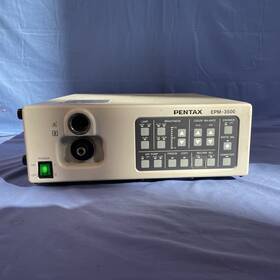
( Brand: Pentax ), ( Manufacturer Part Number: EPM-3500 ), ( Part Type: Video )
Review PENTAX Endoscopy Video Processor
The Pentax EPM-3500 Endoscopy Video Processor is a sophisticated and high-performance system designed for enhancing the image quality of endoscopic procedures. This video processor boasts advanced features to deliver crisp, clear, and stable images, ensuring an accurate diagnosis and effective treatment.
The EPM-3500 is equipped with a high-resolution color LCD monitor, providing excellent visualization of the procedure. The monitor size is 12 inches (30.5 cm) diagonally, and it offers a resolution of 1024 x 768 pixels, ensuring that the smallest details are not missed. The monitor's wide viewing angle of 120 degrees allows for optimal image observation from multiple angles, making it ideal for use in group settings or for teaching purposes.
This video processor is capable of handling various endoscopic imaging modalities, such as white light, narrow band imaging (NBI), and i-SCAN. NBI is a mode that enhances the visualization of mucosal structures, making it particularly useful for detecting early signs of abnormalities in the gastrointestinal tract. i-SCAN is a mode that optimizes the image contrast, making it easier to distinguish between normal and abnormal tissue.
The EPM-3500 comes with a built-in image memory, allowing users to store and review images, as well as to print them for documentation purposes. The system also features a USB interface for easy data transfer to external storage devices or computers.
Additionally, the Pentax EPM-3500 video processor offers a range of connectivity options, including HDMI and RGB outputs, allowing for seamless integration with external recording systems or monitors. It also features a user-friendly interface, making it easy for clinicians to navigate and customize settings to suit their specific needs.
The EPM-3500 is designed for durability and ease of use, with a compact and ergonomic design that is both portable and easy to install. Its robust construction ensures that it can withstand the rigors of daily use in a clinical setting, while its lightweight design makes it easy to transport between procedures.
In summary, the Pentax EPM-3500 Endoscopy Video Processor is a versatile and advanced system that delivers superior image quality for endoscopic procedures. Its high-resolution color LCD monitor, support for various imaging modalities, built-in image memory, and user-friendly interface make it an essential tool for clinicians in the field of gastroenterology and other related specialties.
The Pentax EPM-3500 endoscopy video processor is a crucial component for medical professionals using endoscopic equipment for diagnostic and therapeutic procedures. This device processes video signals generated by endoscopes to produce clear and stable images for real-time analysis. Let's examine some potential pros and cons of investing in the Pentax EPM-3500.
Pros:1. Superior image quality: The EPM-3500 is renowned for its ability to deliver high-definition images with excellent color representation and contrast, ensuring accurate diagnosis and effective treatment planning.
2. Robust and reliable: The device is built with high-quality components and is designed to withstand the rigors of daily use in a clinical setting.
3. Flexible connectivity options: The EPM-3500 supports various video output options, including HD-SDI and S-Video, enabling easy integration with different types of endoscopes and display devices.
4. User-friendly interface: The device features an intuitive and easy-to-use interface, making it simple for medical personnel to navigate and adjust settings for optimal image quality.
5. Advanced image processing capabilities: The EPM-3500 includes advanced image processing features such as white balance correction, image enhancement, and noise reduction, providing improved image quality and reducing the need for manual adjustments during procedures.
Cons:1. Cost: The Pentax EPM-3500 is a high-end video processor, and its price tag may be a significant investment for some medical facilities, especially smaller clinics or practices.
2. Size and weight: The device is relatively large and heavy compared to some other video processors in its class, which may require additional space and support during transportation and installation.
3. Limited compatibility: While the EPM-3500 supports a range of video outputs, it may not be compatible with all endoscope models or specific configurations. Medical professionals should ensure that their endoscopes are compatible before investing in the processor.
4. Potential for software updates: The EPM-3500 may require occasional software updates to maintain optimal performance and compatibility with new endoscope models or hardware configurations.
In conclusion, the Pentax EPM-3500 is a high-performance endoscopy video processor that delivers superior image quality, advanced image processing capabilities, and flexible connectivity options. While its cost and size may be drawbacks for some users, the benefits of improved diagnostic accuracy, reliable performance, and user-friendly interface make it an excellent investment for medical facilities focused on endoscopic procedures. Ultimately, the decision to purchase the Pentax EPM-3500 should be based on the specific needs and budget of your medical practice or facility. If the benefits align with your requirements, the investment in this advanced video processor is likely to yield significant returns in terms of improved patient care and outcomes.
Details:
Integrated 300W Xenon Light Source: Delivers superb, high-intensity illumination for clear visualization of the surgical site. Advanced Image Control: Features digital brightness control and contour enhancement to optimize optical evaluation tissue differentiation. Data Management: Includes intuitive data management systems for the rapid storage and organization of patient user information. Versatile Connectivity: Supports extensive peripheral equipment with video output options including RGBS, Y/C, and Composite NTSC.
Digital Signal Processing: Utilizes 10-bit depth per channel to produce high-resolution images with over 1 billion colors.
part #: epm3500 prices
- $599.99-$899.00
specifications labequipi:
- brand: Pentax
- mpn: Epm-3500
- part type: Video
shipping labequipi:
- carrier: USPS
- class: Standard
- transit: 4-9 Days
- type: Calculated
- cost: $124.91
- service: USPS Ground Advantage
offer labequipi:
- availability: In Stock
- started: February 17, 2026
- sold: 0
- best offers: True
- options: Ship-to-home
- quantity: 1
general labequipi:
- Healthcare, Lab Dental > Medical Lab Equipment, Devices > Other Medical Lab Equipment
- condition: Used
payments labequipi:
- wallet: Paypal
- other
- credit card: Diners-club
seller labequipi:
- rating: 100.0%
- # reviews: 389
- city: Lindon, Utah
returns labequipi:
- policy: Returns Accepted
- method: Money back
- paid by: Seller
- time: 30 Days
Pentax EPM-3500 Is Similar To:
- Pentax Epk-700 Endoscopy Processor And Light Source (69.6% similar) In most cases, we match the manufacturer warranty - some beat it...(January 8th, 2025)
- Pentax Ee-1540 Video Endoscope Flexible Scope For Parts repair (48.5% similar) Specifications: model: EE-1540. Marked with directional controls for angulation and valve function. Key features: includes integrated video connector and control head. Control: 4-WAY angulation up/down/left/right. May have internal or optical faults. Untested and sold as-is. No accessories or ...(May 3rd, 2025)
- Pentax Sha-p3 Sha-p5 Hand Held Endoscopy Leakage Leak Tester Medical Gauge (45.2% similar) Brand new in box free shipping...(October 10th, 2025)
- Pentax Epk-1000 Endoscope Video Processor Free Shipping (75.5% similar) Cosmetic condition: show some signs of usage, please refer to the pictures. Does not include: any other accessories not mentioned above nor shown in the pictures. Stock # condition: used. Package includes: power cord, only as shown in the pictures. Regardless of the origin equipment, documentation ...(December 9th, 2025)
- Pentax Vls-1070stk Video Naso Pharyngo Laryngoscope (39.1% similar) In most cases, we match the manufacturer warranty - some beat it. Striker notice...(February 9th, 2026)
- Pentax Vls-1190stk Video Naso Pharyngo Laryngoscope (39.1% similar) Please review the difference below. Crating items shipped to the lower 48 states of USA, Canada, or Mexico usually don't require crating. Striker notice. For the power cord, if you see a separate picture of you'll receive it. Crating items shipped to the lower 48 states, Canada, or Mexico typically ...(March 19th, 2026)
- Pentax Ee1580k Ee-1580k 2.0 High-resolution Video Flexible Transnasal Esophagoscope (40.3% similar) Inventory id: WH2-Z2-S11A, 032826, bar. 1841 w carriage house Dr, baton rouge, la 70815. Regardless of the origin equipment, documentation provided or identification appearing upon equipment described and offered here is in no way certified for, recommended for any specific use. Comes as pictured. ...(March 28th, 2026)