CONSTANT SYSTEMS T2-10-AA-AA Cell Disruption Disruptor High Pressure T2/10/AA/AA Disruption/disruptor Homogenizer
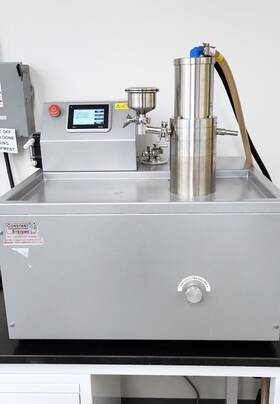
( Brand: Constant Systems ), ( Manufacturer Part Number: T2/10/AA/AA ), ( Part Type: Pressure Cell Homogenizer ), ( Country Of Origin: United States ), ( Intended Use/discipline: Biological Laboratory, Medical Laboratory, Microbiological Laboratory, Physical Laboratory, Cell Disruptor/ Cell Disruption System/ High Pressure Homogenizer )
Review CONSTANT SYSTEMS T2/10/aa/aa Cell Disruption/disruptor High Pressure Homogenizer
Introducing the T2/10/AA/AA High Pressure Homogenizer, a sophisticated and versatile lab-scale cell disruption system engineered for a wide range of applications. This high-performance homogenizer is designed to deliver precise, reproducible results in the disruption of various types of cells, including bacteria, yeast, and eukaryotic cells.
The T2/10/AA/AA model is equipped with a robust 10,000 psi (689 MPa) maximum operating pressure, which enables efficient cell disruption by subjecting the cells to extreme shear forces. This high pressure is generated through a two-stage homogenization process, where the first stage reduces the volume of the sample and the second stage achieves the desired degree of cell disruption.
The homogenizer features an advanced temperature control system, allowing for precise temperature management during the cell disruption process. This is crucial as many cellular processes are temperature-sensitive, and maintaining consistent temperatures can ensure optimal results.
The T2/10/AA/AA High Pressure Homogenizer comes with a user-friendly touchscreen control panel, making it easy to operate and program. The system also includes a number of safety features, such as pressure relief valves and an automatic shut-off system, ensuring safe and reliable operation.
This homogenizer's design is not only efficient but also versatile, as it can accommodate various sample volumes and container sizes. The system comes with a standard 500 mL jacketed vessel, but additional vessels with capacities ranging from 10 to 5000 mL are available as optional accessories.
Additionally, the T2/10/AA/AA High Pressure Homogenizer is constructed from high-quality stainless steel, ensuring durability and resistance to corrosion. The system is also easy to clean and maintain, making it an ideal choice for both research and industrial applications.
In summary, the T2/10/AA/AA High Pressure Homogenizer is an advanced and versatile lab-scale cell disruption system. With its high-pressure two-stage homogenization process, temperature control system, user-friendly touchscreen control panel, and safety features, this homogenizer delivers precise, reproducible results in the disruption of various types of cells. Its durable design, versatility, and ease of use make it an essential tool for researchers and industrial applications alike.
High-pressure homogenizers, including T2, T10, and AA models with cell disruption capabilities, are commonly used in various industries such as food, pharmaceuticals, and biotechnology for the production of emulsions, suspensions, and nanoparticles. Here are some pros and cons of investing in a high-pressure homogenizer with cell disruption capabilities:
Pros:1. Enhanced Product Quality: High-pressure homogenization with cell disruption leads to the production of smaller particle sizes, improved stability, and enhanced product quality. This is particularly important in industries where particle size and distribution play a crucial role in product performance.
2. Increased Product Yield: Cell disruption technology allows for the release of intracellular components, increasing the overall yield of valuable products. This can lead to cost savings and improved efficiency.
3. Versatility: High-pressure homogenizers with cell disruption capabilities offer versatility, as they can be used for a wide range of applications, including the production of emulsions, suspensions, nanoparticles, and biopharmaceuticals.
4. Consistent Process: High-pressure homogenization with cell disruption provides a consistent process, ensuring that product quality remains consistent batch after batch.
5. Scalability: High-pressure homogenizers with cell disruption capabilities can be used on a lab scale as well as on a large industrial scale, making them suitable for both research and development and commercial production.
Cons:1. High Investment Cost: High-pressure homogenizers with cell disruption capabilities can be expensive to purchase, particularly the larger industrial models. This can make them a significant investment for smaller companies or research labs.
2. Complex Operation: Operating a high-pressure homogenizer with cell disruption capabilities can be complex, requiring specialized knowledge and training to ensure that the process is carried out effectively and safely.
3. Maintenance: High-pressure homogenizers with cell disruption capabilities require regular maintenance to ensure that they continue to operate effectively. This can include regular cleaning, replacement of wear parts, and calibration of the system.
4. Safety Concerns: High-pressure homogenization with cell disruption involves the use of high pressures and potentially hazardous materials. Proper safety protocols and training are essential to ensure the safety of operators and the environment.
Conclusion:Investing in a high-pressure homogenizer with cell disruption capabilities can be a valuable addition to any laboratory or industrial production facility, particularly in industries where particle size and distribution play a crucial role in product performance. While the upfront investment cost can be significant, the benefits in terms of enhanced product quality, increased product yield, versatility, consistent process, and scalability can make the investment worthwhile. However, it is essential to consider the complex operation, maintenance requirements, and safety concerns associated with these systems to ensure that they are used effectively and safely.
Recommendation:If you are considering investing in a high-pressure homogenizer with cell disruption capabilities, it is recommended that you carefully evaluate the specific requirements of your application and the available options in the market. Consider factors such as the scale of production, the required particle size and distribution, and your budget. It is also essential to ensure that you have the necessary expertise and resources to operate and maintain the system safely and effectively. Finally, it may be beneficial to consult with industry experts or equipment suppliers to gain a better understanding of the specific benefits and challenges associated with these systems.
Details:
part #: t210aa prices
- $7445.00-$10999.00
specifications labequipi:
- brand: Constant Systems
- mpn: T2/10/aa/aa
- part type: Pressure Cell Homogenizer
- country of origin: United States
- intended use/discipline: Biological Laboratory, Medical Laboratory, Microbiological Laboratory, Physical Laboratory, Cell Disruptor/ Cell Disruption System/ High Pressure Homogenizer
offer labequipi:
- started: January 11, 2026
- options: Ship-to-home
- quantity: 1
- availability: In Stock
- sold: 0
- best offers: True
payments labequipi:
- credit card: Discover
- other
- wallet: Paypal
general labequipi:
- Healthcare, Lab Dental > Medical Lab Equipment, Devices > Other Medical Lab Equipment
- condition: Used
seller labequipi:
- rating: 100.0%
- # reviews: 678
- city: San Diego, California
shipping labequipi:
- type: Fixed
- service: Flat Rate Freight
- class: Freight
- cost: $360.00
returns labequipi:
- policy: No Returns
Constant Systems T2-10-AA Is Similar To:
- Techtongda Sf-056988 Pressure Pot For Remove Tubbles 110v 500w Dro 3-4pa Constant Temp Heating (24.1% similar) Digital display for precise time and temperature settings. Clear data visualization for convenient monitoring and adjustment. Enables consistent temperature heating with precise pressure control for optimal results. Durable material ensures long-term reliability. Efficient drain system timely steam ...(November 17th, 2025)
- Shimadzu 204-03243 Constant Temperature 4 Pcs Mounting Cell Holder In Case (28.4% similar) Make sure to view all product photos as they show the actual condition and everything that is included in sale. Note that the case shows some wear as seen in photos. In great shape all around. This came from a large surplus lot of laboratory equipment...(March 3rd, 2026)